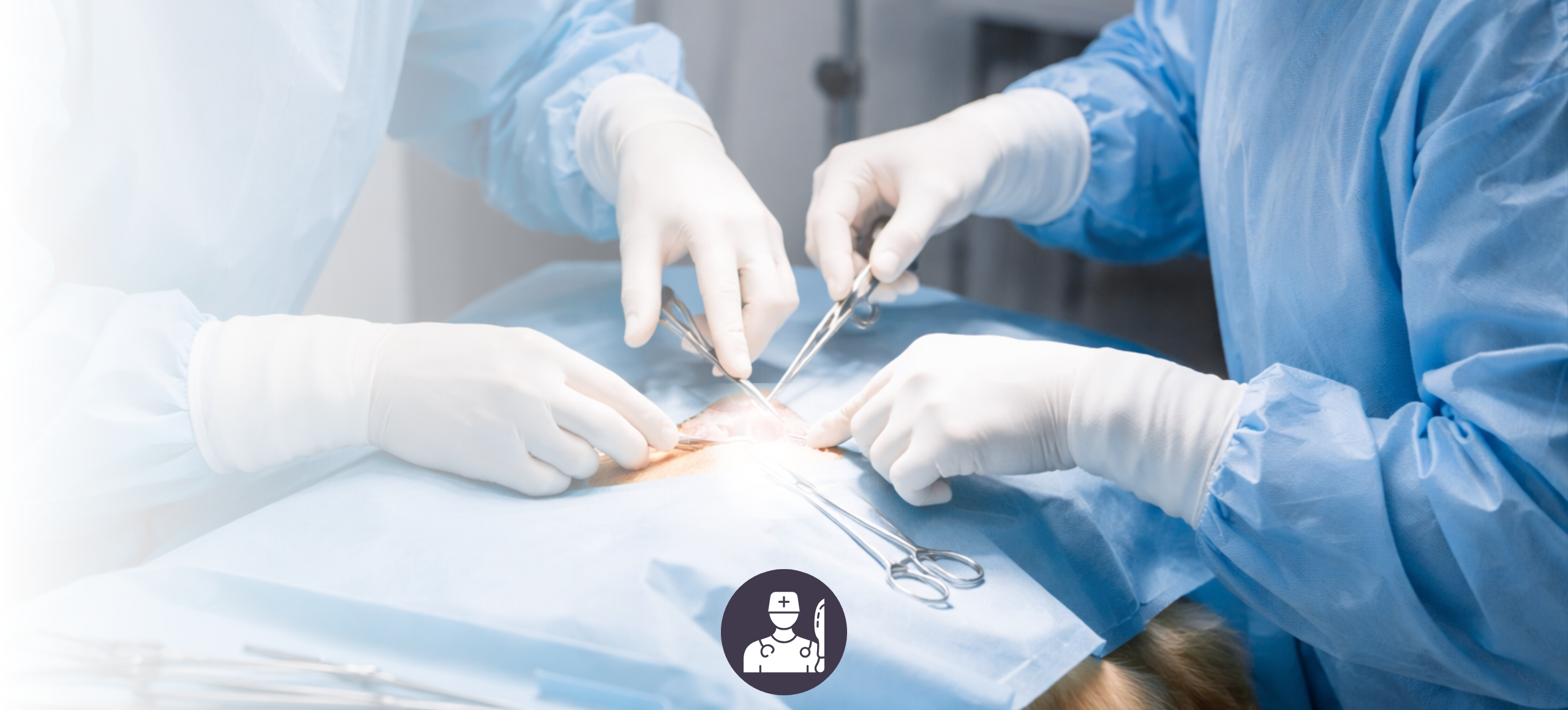
Vet & Cie : Surgical Excellence Centered on Safety and Comfort
Whether it is an elective procedure (spay/neuter), dental surgery, or a complex orthopedic operation, Vet & Cie Clinic places your pet’s safety and comfort at the heart of every procedure. We feature a modern operating suite, equipped to meet the strictest AAHA hygiene and monitoring standards.
💡 Did you know? ?
We follow the Fear Fre℠ philosophy,
aimed at reducing your companion’s anxiety and stress during their stay with us.
WHERE DOES YOUR PROCEDURE TAKE PLACE ?
| BROSSARD VETERINARY HOSPITAL |
Our Center of Excellence : All specialized, orthopedic, and abdominal surgeries are performed here, including spays and neuters.
| SAINT-LEONARD CLINIC |
This service point is dedicated exclusively to cat neuters. For all other surgeries, take advantage of our simplified logistics.
 Vet & Cie Safety Standards
For every intervention (exceptions may apply), we perform:
- Full bloodwork to check organ function before anesthesia.
- Continuous monitoring of 16 vital parameters by a certified technician.
- Therapeutic Laser on every wound to promote healing.
- Multimodal pain management before, during, and after the procedure.
OUR SURGICAL PROCEDURES
 Reproductive System & Sterilization
| Procedure | Medical Expertise |
|---|---|
| Ovariohysterectomy / Ovariectomy | Female sterilization preventing serious infections such as pyometra. |
| Standard / Cryptorchid Castration | Removal of testicles (including undescended testicles) to reduce cancer risks. |
| Scrotectomy | Surgical removal of the scrotal sac during castration or for skin pathologies. |
| Pyometra | Emergency surgical intervention to treat a severe uterine infection. |
| Cesarean Section | Emergency procedure to assist with delivery and ensure newborn survival. |
| Vulvoplasty | Correction of skin folds to prevent recurrent urinary tract infections. |
| Vaginal Polyp Excision | Surgical removal of benign masses within the reproductive tract. |
 Digestive System
| Procedure | Medical Expertise |
|---|---|
| Gastrotomy / Enterotomy | Opening of the stomach or intestine for the removal of foreign bodies. |
| Enterectomy | Removal of a compromised intestinal segment with anastomosis of healthy tissues. |
| Intestinal Biopsy | Sampling for the diagnosis of infiltrative or inflammatory diseases. |
| Gastropexy (Curative or Preventive) | Fixing the stomach to the abdominal wall to prevent gastric torsion (GDV). |
| Rectal Prolapse Reduction | Repositioning and fixation of exteriorized rectal tissues. |
| Esophageal Tube | Placement of a feeding tube to ensure long-term nutritional support. |
| Rectal Polyp Excision | Removal of localized masses in the terminal part of the digestive system. |
 Other Abdominal Surgeries
| Procedure | Medical Expertise |
|---|---|
| Hepatic Biopsy | Diagnostic sampling of liver tissue under strict monitoring. |
| Splenectomy (Total or Partial) | Removal of the spleen following a tumor, rupture, or trauma. |
| Cystotomy | Opening of the bladder to extract painful urinary stones. |
| Partial Cystectomy | Excision of a portion of the bladder wall, often in cases of neoplasia. |
| Hernia Correction (Umbilical or Inguinal) | Repair of the abdominal wall to reintegrate herniated organs. |
 Skin Surgeries
| Procedure | Medical Expertise |
|---|---|
| Skin Mass Excision | Removal of simple or complex masses; histopathological analysis recommended. |
| Wound Closure and Debridement | Surgical care of traumatic wounds and treatment of deep abscesses. |
| Rhinoplasty / Nares Resection | Optimizing airways for brachycephalic breeds (BOAS). |
| Mastectomy (Total, Partial, or Nodulectomy) | Removal of mammary tissues for the treatment of tumors. |
 Limbs and Mobility (Amputations)
Interventions aimed at eliminating unbearable chronic pain or treating grave pathologies.
| Procedure | Medical Expertise |
|---|---|
| Digital Amputation | Removal of a toe due to a tumor, trauma, or severe infection. |
| Scapular / Coxofemoral Amputation | Full limb removal to preserve the animal’s overall quality of life. |
| Tail Amputation | Partial or total removal of the tail (fractures, tumors). |
 Ophthalmology
| Procedure | Medical Expertise |
|---|---|
| Nictitating Gland Prolapse | Surgical repositioning of the third eyelid gland (“cherry eye”). |
| Entropion Correction | Eyelid reshaping to prevent eyelashes from rubbing against the cornea. |
| Eyelid Mass Excision | Meticulous removal of tumors located on the eyelid margin. |
| Keratotomy | Corneal intervention to promote the healing of persistent ulcers. |
| Enucleation | Removal of the eyeball in cases of severe trauma or terminal glaucoma. |
Need clarification on a surgery?
Our medical team is available to answer your questions regarding our monitoring standards and pain management.
FINANCING AND PAYMENT TERMS

0% INTEREST FINANCING
Pay all your veterinary fees over 3, 6 or 12 months interest-free. Financing provided by Fairstone Financial.

DEPOSIT TERMS
To ensure the scheduling of your procedure:
- 25% deposit required upon booking.
- 50% deposit required upon drop-off of the animal.
- Final payment (25%) required at the time of discharge.
Frequently Asked Questions (FAQ): Veterinary Surgery
▶ Why is a consultation mandatory before surgery?
Just like in human medicine, a surgical procedure is never improvised. This meeting is essential to guarantee your animal’s safety and well-being:
- Clinical Examination: Auscultation of the heart and lungs to validate fitness for anesthesia.
- Accurate Diagnosis: Confirmation that surgery is the best treatment option.
- Tailored Protocol: Planning of analgesia and anesthesia according to your companion’s unique needs.
- Transparency: Explanation of the procedure, risks, and post-operative care.
▶ Should my pet fast before their operation?
Yes, this is a vital safety rule. Your companion must fast from food since the previous evening, generally starting at 8:00 PM. Water can be left available until the morning of the procedure, unless otherwise instructed.
Under anesthesia, normal reflexes that protect the airways, such as coughing and swallowing, are absent. If the stomach contains food or liquids, there is a risk that these may rise and be inhaled into the lungs, which could lead to serious complications. Fasting significantly reduces the risk of regurgitation and aspiration during the procedure, while making anesthesia control and ventilation easier. Even though intubation is performed to protect the airways, this protection is not absolute, and following fasting instructions remains indispensable.
▶ How do you manage pain during and after surgery?
Pain management is our absolute priority. We use a multimodal protocol:
- Pre-operative: Analgesics to reduce stress.
- During: Local anesthesia or regional nerve blocks.
- Post-operative: Therapeutic laser and home medication.
▶ What are the risks associated with general anesthesia?
While zero risk does not exist, we minimize it through rigorous AAHA standards: systematic bloodwork, monitoring of 16 vital parameters, and continuous intravenous support.
▶ What should I monitor once we return home?
Monitor appetite and the appearance of the wound. Prevent licking (protective collar/cone is mandatory). In case of excessive redness or lethargy, contact us immediately.
▶ Do you offer financing for veterinary surgeries?
Yes, we offer an exclusive 12-month interest-free financing option to make surgeries more accessible.
LEARN MORE ABOUT FINANCING →
Prioritize your pet’s safety and comfort
Ready to plan a procedure? Get a detailed estimate including our advanced monitoring standards (AAHA).
Estimate valid for 30 days
Take advantage of free transport via Vite Pets for our Saint-Leonard clients to our Brossard center of excellence.
Ready to plan a safe procedure ?
A pre-operative evaluation is the essential first step to guarantee the success of the intervention and your pet’s well-being. Book your consultation in just a few clicks via our online platform :
Note: Our estimates are valid for 30 days and include constant monitoring of 16 vital parameters for increased safety.