
What is an ear hematoma?
An ear hematoma (or aural hematoma) is a blood collection that forms inside the ear flap (pinna) following the rupture of one or more small blood vessels. It typically occurs when the animal vigorously shakes its head or repeatedly scratches its ears.
Blood accumulates between the skin and cartilage of the ear flap, forming a swollen, heavy, fluid-filled pocket, much like a water balloon. Although aural hematomas are more common in dogs, they can also affect cats.
An aural hematoma is generally the result of an underlying problem, most often an ear infection. It is therefore essential to identify and treat the cause to promote healing and reduce the risk of recurrence.
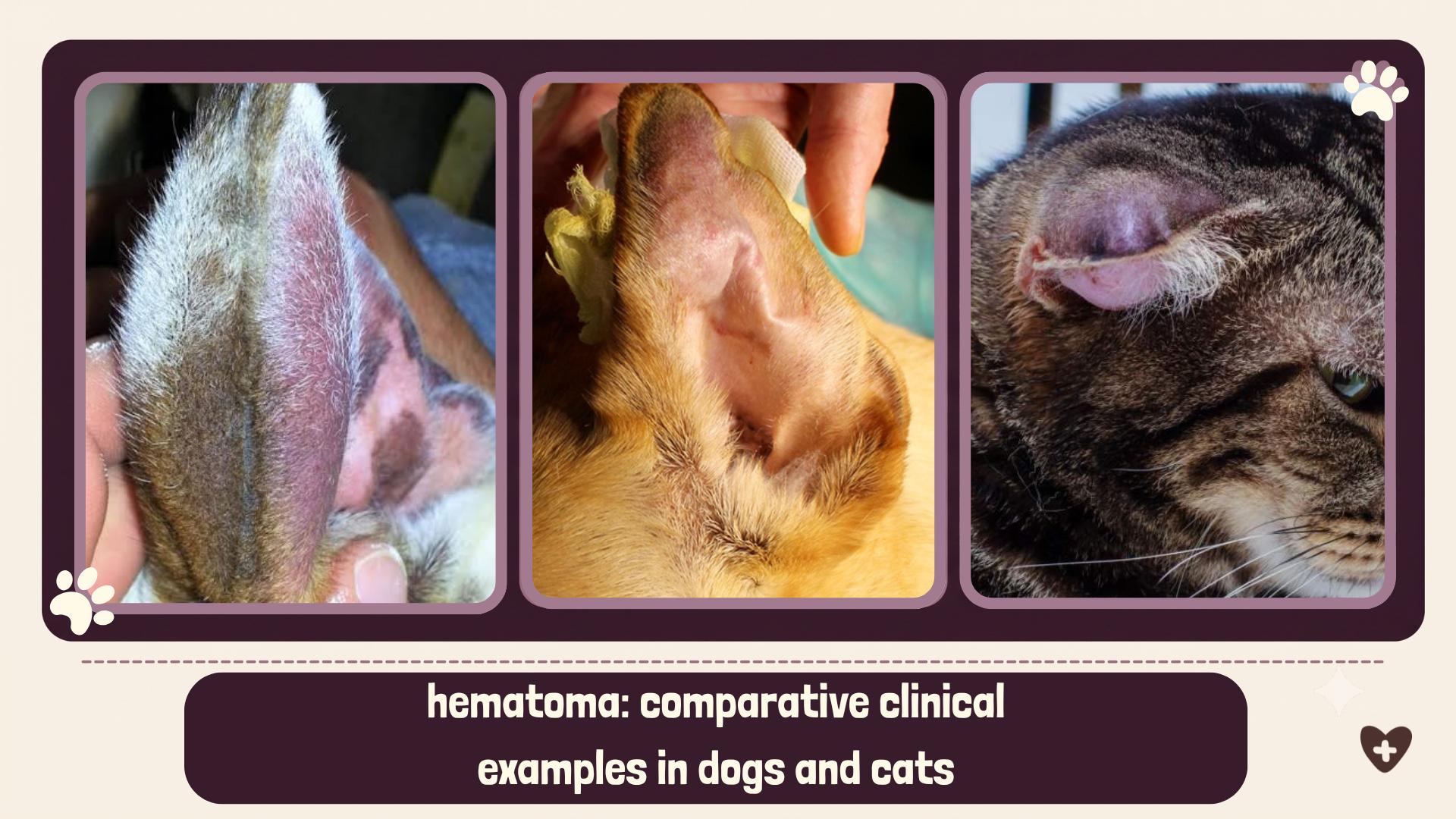
Why should you be concerned?
A very small hematoma can sometimes go unnoticed, but in the majority of cases, intervention is necessary for several reasons:
- Ear canal blockage: The swelling can become large enough to obstruct the entrance to the ear canal. The veterinarian can then no longer properly examine the ear or effectively treat the ear infection or the underlying problem causing the head shaking.
- Discomfort and pain: The blood accumulation exerts significant pressure on the ear flap, which is often painful and very uncomfortable for the animal.
- Abnormal scarring: Without treatment, the trapped blood is gradually replaced by scar tissue. The ear flap thickens, becomes more rigid, and loses its normal shape. In some cases, this scarring can also alter the ear canal opening and complicate the management of ear infections.
- Permanent deformity: The ear can wrinkle, thicken, and take on an irregular appearance known as a “cauliflower ear”. This deformity is permanent, even if the hematoma eventually resolves on its own.
Treatment Options
There are several approaches to treating a hematoma, which should be discussed with your veterinarian depending on your pet’s case:
1. Surgery (suture quilting) –
The most effective method
This is the most commonly recommended treatment. The veterinarian makes an incision to drain the blood and clots. They then place numerous sutures through the ear flap (like quilting a mattress) to hold the skin against the cartilage and prevent blood from accumulating again. The stitches are generally removed after about 2 to 3 weeks.
Advantages
✓Best success rate.
✓Low risk of recurrence.
✓Allows for good healing of the ear flap.
|
Disadvantages
✕Requires general anesthesia.
✕Despite successful surgery, the ear may retain a slight thickening or irregular appearance.
✕More rarely, permanent deformity of the ear flap may persist, especially when the hematoma was large or present for a long time.
|
2. Continuous drainage (placement of a cannula or drain)
A small drain is placed in the hematoma to allow the fluid to drain gradually over several days to a few weeks, giving the tissues time to heal.
Advantages
✓Less invasive procedure than traditional surgery.
✓Can be a good option for certain patients.
|
Disadvantages
✕The drain requires at-home care.
✕The animal must tolerate the device well.
✕The risk of recurrence is generally higher than after surgery with sutures.
|
3. Syringe aspiration
The veterinarian removes the fluid using a needle and syringe.
Advantages
✓Quick procedure.
✓Usually does not require general anesthesia.
|
Disadvantages
✕The fluid very often reaccumulates within a few hours or days.
✕Multiple treatments are often necessary.
✕A slight risk of infection exists.
✕This technique is ineffective when the blood has already formed clots.
|
4. Medical treatment
In certain well-selected cases, medical treatment may be considered. This generally consists of draining the hematoma and then injecting a corticosteroid directly into the cavity to reduce inflammation and limit recurrence. Some clinics may also offer laser therapy as an adjunctive treatment.
Advantages
✓Sometimes avoids surgery.
✓Can be suitable for animals with a high anesthetic risk.
|
Disadvantages
✕The success rate is generally lower than that of surgery.
✕Multiple treatments or follow-ups may be necessary.
✕The risk of recurrence is higher.
|
Things to remember
Regardless of the treatment chosen, it is essential to identify and treat the cause of the hematoma. Without this, the animal will continue to shake or scratch its ears, which considerably increases the risk of recurrence.

