
Mammary tumors in cats

Mammary tumors are among the most common cancers in female cats, especially those that have not been spayed or were spayed late. Unlike in dogs, where about half of mammary tumors are benign, nearly 90% of mammary tumors in cats are malignant (cancerous).
These tumors can grow rapidly and spread to other organs, particularly the lungs. Early detection is therefore essential to improve the chances of successful treatment.
How to recognize a mammary tumor?
Mammary tumors generally appear as small, firm masses located under the skin, near the nipples. They are often painless at first and can easily go unnoticed.
Over time, they can grow, invade surrounding tissues, and sometimes cause sores or ulcers on the surface of the skin.
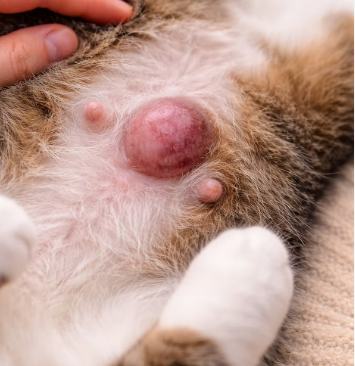
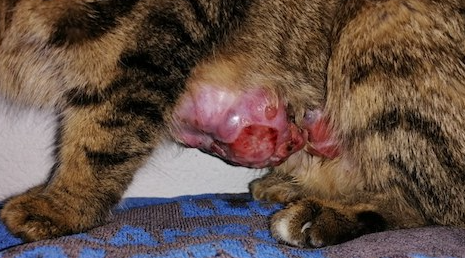
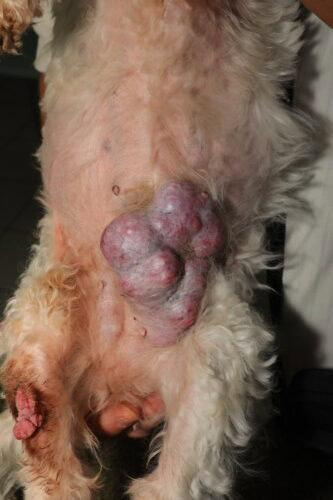
Any mass in the mammary region should be examined promptly by a veterinarian, even if it is small and does not seem to bother your cat.
How to prevent mammary tumors?
Early spaying is the most effective preventive measure. Sex hormones play a major role in the development of these tumors, and removing the ovaries at a young age helps significantly reduce the risk.
- » Spaying around 6 months: risk reduction of approximately 91%.
- » Spaying before 12 months: risk reduction of approximately 86%.
- » Spaying after 2 years: no significant protective effect demonstrated.
However, spaying does not guarantee absolute protection. Regular monitoring of the mammary glands remains essential, even in spayed cats.
How are they diagnosed and treated?
When a mammary mass is detected, additional examinations are recommended, including chest X-rays and blood tests. These tests assess the cat’s overall health and check for any spread of the cancer.
Surgery is the primary treatment. In cats, it is generally recommended to remove the entire affected mammary chain rather than just the visible lump. In some cases, removing both chains may be advised, usually performed in two separate surgeries.
A biopsy and analysis of the removed tissue then confirms the nature of the tumor, evaluates its aggressiveness, and clarifies the prognosis. Chemotherapy may also be considered in certain situations.
What is the prognosis?
The prognosis depends primarily on the size of the tumor, its aggressiveness, and the possible presence of metastases.
The smaller the tumor at the time of removal, the better the chances of survival generally are.
As a general indication, some studies report a median survival of about 4 and a half years for tumors smaller than 2 cm, compared to about 6 months for those larger than 3 cm. These statistics remain variable depending on the stage of the disease and the treatments provided.
Key Takeaways
Early spaying is the best way to reduce the risk of mammary tumors in cats. However, no cat is completely immune.
Get into the habit of gently checking your cat’s mammary area while petting her. If you notice a small mass, do not wait for it to grow before consulting: early diagnosis and treatment can make a major difference.
SOURCE: URL: https://veterinarypartner.vin.com/doc/?id=4952564&pid=19239
