
Abscess
DermatologyEmergenciesFirst AidPathologiesSurgery
What is an abscess in dogs or cats and how should it be treated?
Abscess Definition
An abscess is a localized accumulation of bacteria under the skin, which typically occurs following a bite or scratch wound. However, when the skin surface heals too quickly, the infection remains trapped deep within the tissue, creating a painful, warm pocket of pus.
– Anal Glands: First, an affected pet may scoot its hindquarters along the floor. Furthermore, if the abscess ruptures, the discharge can easily be mistaken for rectal bleeding.
– Tooth Root: In addition, a bump or swelling often forms right below the eye, causing severe pain while chewing. Consequently, this condition requires surgical tooth extraction under general anesthesia, as antibiotics alone provide only temporary relief.
Symptoms to Watch For
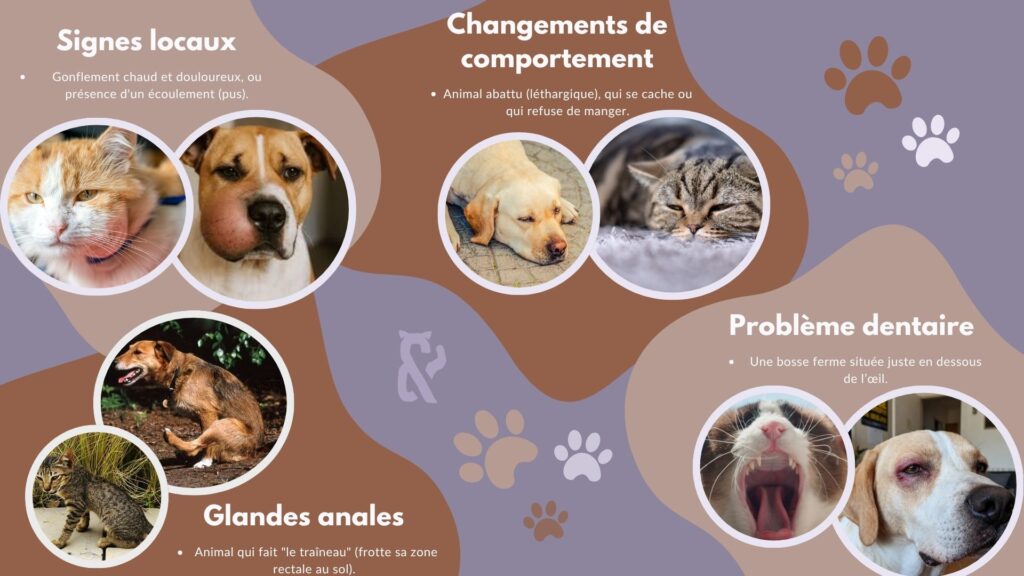
Watch closely for localized swelling, heat, tenderness, lethargy, or hiding behavior.
Treatment and Home Care
Therefore, an abscess must be examined by a veterinarian within 24 hours. As a result, surgical management involving drain placement or tooth extraction may be necessary.
– Cleaning & Antiseptic: Gently clean around the wound or drain using the prescribed antiseptic twice daily for 3 to 5 days, as pus drains around the latex tubing rather than through it.
– Warm Compresses: Next, apply a clean cloth soaked in very warm water with gentle pressure for 5 to 10 minutes twice daily, as directed by your veterinarian.
– Medications: In addition, administer all prescribed antibiotics completely to prevent the infection from returning, even if your pet seems better.
– Rest: Finally, keep your pet strictly indoors until the infection has completely resolved.
Precautions: Strictly Avoid
* DO NOT attempt to lance or squeeze the abscess yourself, as this can force infection deeper into inner tissue layers.
* DO NOT give human medications: Indeed, human pain relievers such as Tylenol (acetaminophen) and Advil (ibuprofen) are highly toxic to pets.
* SAFETY & HYGIENE: Always wash your hands thoroughly after handling drainage. Furthermore, avoid compressing wounds on a fractured cat to prevent pain-induced bites.
Medical Follow-Up
Contact us immediately if: you notice increased redness or warmth, failure to heal, loss of appetite for more than 24 hours, or a decline in your pet’s overall health.
