
CANINE ENTROPION
11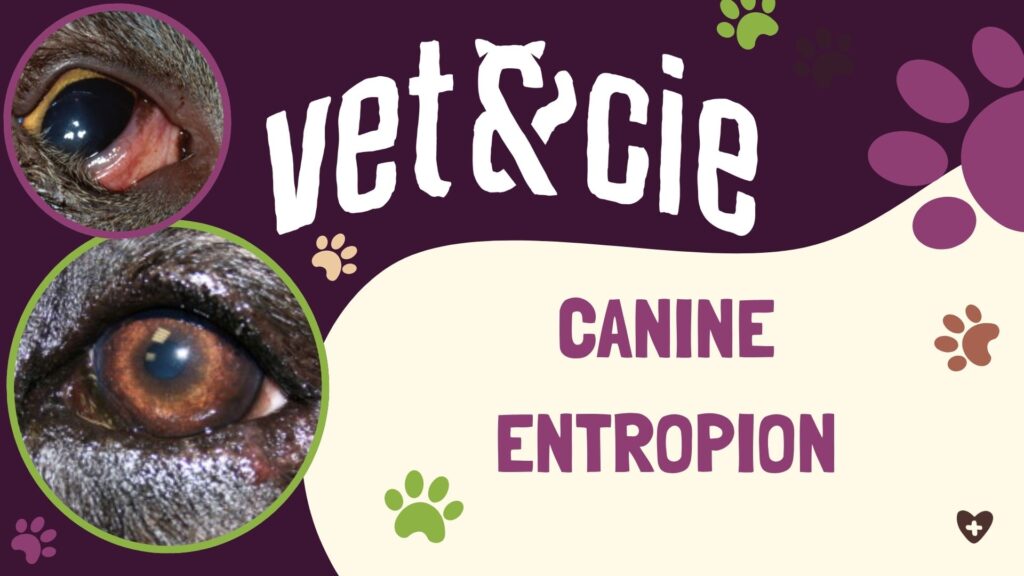
Medical information and advice sheet for pet parents
What is entropion?
Entropion is an uncomfortable and painful eye condition in which the eyelids roll inward. As a result, eyelashes and hair continuously rub against the cornea (the transparent surface of the eye), causing constant irritation and damage.
This abnormality can affect the upper eyelid, the lower eyelid, or both at the same time. It can also occur in one eye or both eyes.
Causes
1. Primary origin (genetic)
In the majority of cases, entropion is hereditary. Due to genetics, it usually manifests early, well before the dog or cat’s first birthday.
Predisposed dog breeds: Boxer, Bull Mastiff, Cavalier King Charles Spaniel, Chesapeake Bay Retriever, Chow Chow, Cocker Spaniel, English Bulldog, Golden Retriever, Great Dane (Airedale), Irish Setter, Labrador Retriever, Poodle, Pug, Chinese Shar-Pei, Springer Spaniel, and Saint Bernard.
Note for flat-faced breeds: Flat-faced (brachycephalic) dog or cat breeds that have entropion at the inner (medial) corner of the eye may not show signs of discomfort due to their unique facial structure.
2. Secondary origin (acquired)
Entropion can also occur as a result of another problem: an infection, muscle spasms due to severe corneal pain, an eyelid scar following an injury, trauma, or nerve damage (loss of normal neurological eyelid function).
Signs and Symptoms to watch for
If your pet suffers from entropion, you will generally observe:
- Squinting (the animal keeps its eye half-closed).
- Excessive and heavy tearing.
- Sensitivity to light (the animal closes its eyes, especially outside).
- Repeated rubbing of the eyes with paws or against objects.
- Mucus or pus discharge.
Beware of complications
In some animals, entropion remains a mild annoyance. In many others, the constant rubbing of eyelashes and hair against the cornea causes painful erosions and ulcers. Without treatment, these lesions can worsen, become infected, and leave permanent scars that reduce vision. In the most severe cases, the ulcer can perforate the cornea, putting your pet’s eye and vision at risk.
Diagnosis
Your veterinarian can diagnose entropion simply during an eye exam. For your pet’s comfort and to facilitate the exam, local anesthesia (in the form of eye drops) is generally used.
Fluorescein test: To check if the cornea is damaged, the veterinarian applies a special dye. This dye only attaches to injured areas and appears under a specific light as a bright green area.
Treatment Options
Medical treatment with antibiotic ointments reduces irritation and treats complications, but it cannot correct the eyelid’s position. Surgical intervention is necessary to resolve the problem.
1. In adult dogs: Blepharoplasty (definitive surgery)
The veterinarian removes a small strip of skin from the outside of the eyelid to tighten and reposition it correctly. This procedure allows the eyelid to be “rolled out,” thereby eliminating hair contact with the eye.
- Efficacy: In the majority of cases, surgery definitively corrects the problem. However, recurrence remains more common in certain breeds, notably the Shar-Pei, due to their numerous skin folds.
- Possible complications: Like any surgery, blepharoplasty carries a low risk of complications. The most common are temporary swelling of the eyelids, slight bleeding, or wound infection. More rarely, under-correction (entropion persists) or over-correction (the eyelid is too open, called ectropion) may require a second surgery. In rare cases, persistent eye irritation may also occur during healing.
- Recovery: Wearing an Elizabethan collar (cone) is generally mandatory during healing to prevent the animal from scratching or rubbing its stitches.
2. In young puppies (under 6 months): Temporary tacking
In puppies under 6 months, definitive surgery is generally avoided because the head and eyelids are still growing. A permanent correction performed too early may therefore no longer be suitable once the animal is an adult.
Instead, the veterinarian places temporary sutures that hold the eyelid in a normal position to protect the cornea during growth. This technique helps prevent ulcers and other eye injuries while waiting for the tissues to develop.
In many puppies, entropion improves or disappears as the head grows. However, some animals will still need blepharoplasty once their growth is complete to definitively correct the problem.
At-Home Care Tips
If your pet has a corneal ulcer, you will need to apply an antibiotic eye ointment:
How to do it: Gently place your thumb just below the lower eyelid and push down very gently. This will pull the eyelid away from the eye and form a small pouch. Apply the ointment inside this open eyelid without ever touching the eyeball with the tube.
Important Notes
- Prognosis: The prognosis is excellent if surgery is performed quickly, before the cornea is damaged. If the cornea is already affected, recovery will depend on the severity of the lesions.
- Reproduction: Since primary entropion is hereditary, affected dogs should not be used for breeding (according to the recommendations of the Canine Eye Registration Foundation – CERF).
- Dog shows: Dogs that have undergone this surgical correction can no longer be shown in conformation shows (breed beauty/purity), as the original defect is masked.
A question or doubt about your pet’s eye health?
Book an appointment now with our veterinary team for a complete examination.
IDEXX NEO — Veterinary Medical Information Sheet
SOURCE : Veterinary Partner – Entropion
