Brachycephalic dogs and cats

Brachycephalic dogs and cats
Medical source: Veterinary Partner (VIN)

What is a Brachycephalic Dog or Cat?

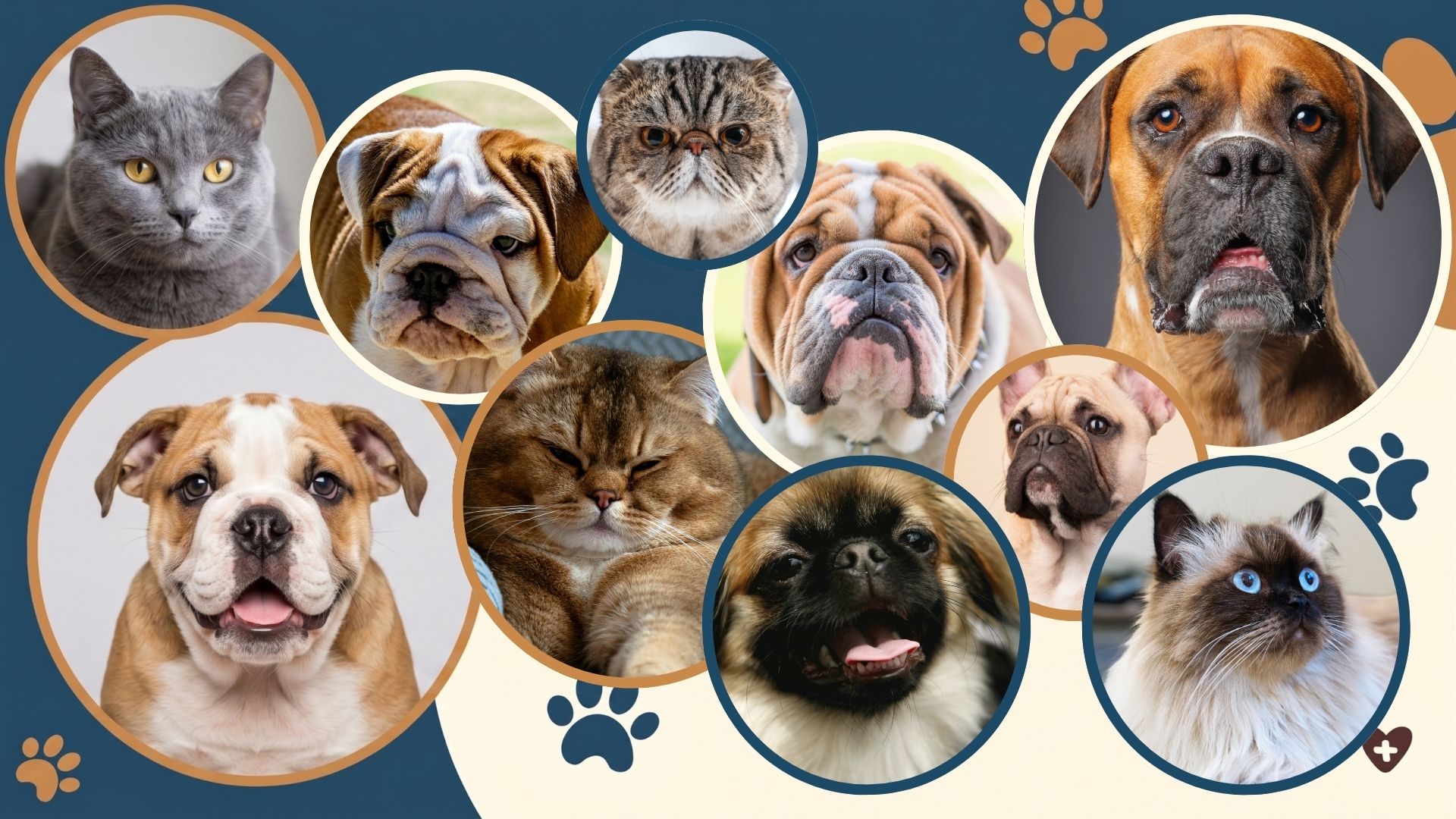
In very simple terms, brachycephalic simply means “flat-faced” or “snub-nosed“. The term comes from the Greek meaning “short head“. These animals have a normal-sized lower jaw, but a compressed upper jaw. This aesthetic appearance, resulting from selective breeding, compromises their health in several ways.

Most common breeds:
Dogs: Pug, Boston Terrier, Pekingese, Boxer, Bulldog (English and French), and Shih Tzu.
Cats: Persian, Exotic Shorthair, Himalayan, and British Shorthair.
The Respiratory System (Obstructive Syndrome)

These animals tend to snore, breathe loudly, and tire easily. (Important note: a cat breathing with an open mouth or panting is in severe distress). Their system features several anatomical deformities:
• Stenotic nares: Abnormally narrowed, slit-like nostril openings forcing mouth breathing. Corrective surgery is possible from 5 months of age.
• Enlarged tongue (Macroglossia): Particularly common in Bulldogs, a very thick tongue further blocks the airways.
• Elongated soft palate: Soft tissue hangs loosely in the throat due to lack of space, causing snorting. It can be surgically corrected.
• Tracheal stenosis: Dangerous narrowing of the windpipe (very common in the English Bulldog), requiring X-rays prior to any anesthesia.
• Everted laryngeal saccules: Pouches in the larynx that turn inside out from increased breathing effort (very common in the Pug).
[!] Caution regarding heat and exercise: Panting is ineffective for cooling their body. The effort to breathe causes inflammation and overheating, making these breeds the primary victims of fatal heatstroke. Without early correction, laryngeal collapse may eventually require a permanent tracheostomy.

The Digestive System

The extreme efforts to inhale air create pressure that causes acid reflux from the stomach into the esophagus. Food stagnates, leading to nausea, vomiting, and pain (particularly in the English Bulldog). Surgical correction of breathing often resolves these digestive issues!

Eye Conditions

Because their eye sockets are very shallow, their eyes are prominent, highly fragile, and vulnerable:

Watery eyes: Tear ducts deformed or blocked by the flattened nose (very common in Persians). High risk of corneal ulcers.
Lagophthalmos: Inability to fully close the eyelids, drying out the eye and potentially leading to blindness.
Nasal fold irritation: The skin fold rubs against the eyeball, requiring diligent cleaning.
Entropion: The eyelid rolls inward, causing the eyelashes to rub against the eye. Explore our surgical services ➡
Dry eye: Inadequate tear production leading to thick discharge.
Proptosis: Minor trauma or pulling on a collar can cause the eyeball to pop out of its socket. Learn more about emergency enucleation ➡

Teeth, Skin, and Reproduction

Crowded teeth: They have as many teeth as other animals, but in a jaw that is too small. Teeth grow crooked, promoting tartar, gingivitis, and early tooth loss.
Skin fold infections: Moisture builds up in facial folds, requiring regular cleaning and disinfection.
Difficult births: The large head of offspring frequently necessitates an emergency C-section.
Grooming challenges in cats: The deformed jaw prevents some cats (especially Persians) from grooming themselves properly.

Essential Daily Care & Travel

Ideal weight: Being overweight drastically worsens breathing difficulties.
Harness required: NEVER use a collar, to avoid crushing the throat or causing proptosis.
Protection against heat and stress.

Why does the AVMA advise against air travel?
The American Veterinary Medical Association (AVMA) warns against cargo hold travel (see AVMA guidelines). Under stress or heat, the effort to inhale air causes throat tissue to swell, resulting in asphyxiation and severe heatstroke that is often fatal in cargo holds. Most airlines now prohibit transporting brachycephalic breeds in cargo.

“Key Takeaway: A brachycephalic pet lives with the equivalent of constantly breathing through a crushed straw. Early surgical intervention (widening the nostrils) dramatically improves their quality of life.”

Scientific Information: This article is adapted from clinical resources by Veterinary Partner (VIN).

Evaluate your pet’s breathing with our team.

Pinched nostrils, heavy snoring, or exercise intolerance? Book an appointment for a respiratory evaluation.